
Mille Lacs County Criminal Court Records
A Mille Lacs County criminal court record is the court case file maintained after a criminal accusation is filed in District Court. The file can include the criminal complaint, probable-cause statement when public, charge list, bail hearing entries, omnibus hearing settings, plea entries, trial minutes, verdict or plea result, sentencing order, probation terms, fines, fees, restitution, and the Register of Actions. The Register of Actions is the running docket for the case. It records each filing, hearing, notice, order, disposition, and financial or sentence event that the court system posts to the case.
Minnesota uses a unified District Court as its trial court. In Mille Lacs County, the Mille Lacs County District Court sits in the Seventh Judicial District at the Mille Lacs County Justice Center and has original jurisdiction over criminal, traffic, juvenile, family, probate, civil, and conciliation cases filed in the county. The local Court Administration office, led by Court Administrator Sara Grife, processes cases, collects fees and fines, manages jury functions, and sends hearing notices. The County Attorney prosecutes felony crimes in Mille Lacs County and gross misdemeanor or misdemeanor crimes occurring outside city limits. For a narrower look at the filed accusations after an arrest, use the Mille Lacs County arrest records and court charges page.
The Mille Lacs County Attorney's Office page describes the prosecutor's role in adult and juvenile cases. That source is useful when reading criminal court records because it identifies the office that reviews law-enforcement investigations, files criminal complaints, represents the State at hearings and trials, and makes sentencing recommendations.
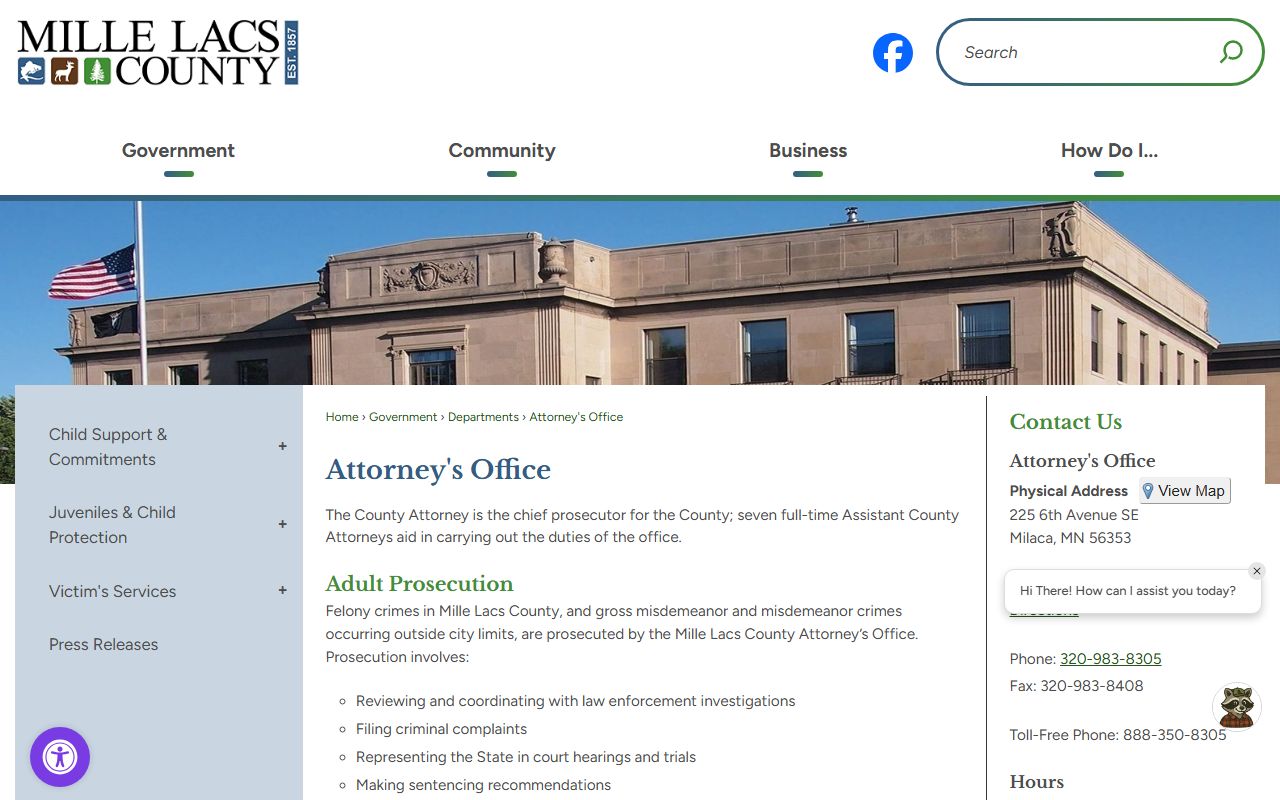
That prosecution context helps explain why a charge can appear in a court file before any conviction exists.
Search Mille Lacs County Criminal Records
The main remote search route is Minnesota Court Records Online Case Search. MCRO is the statewide public access system for Minnesota District Court case data. It is free to search, but the public online record is unofficial and remote access is limited by court rules. If a case does not appear by name, that does not always mean no case exists. Pending criminal, traffic, and petty misdemeanor cases without conviction may not return by defendant-name search, while a case-number search may still work if the number is known.
- Open MCRO Case Search and accept the posted terms before searching.
- Search by defendant name, case number, citation number, or attorney information, depending on what is known.
- Use the county and case category filters to narrow results to Mille Lacs County criminal matters.
- Open the case result and review the Register of Actions, hearings, charge entries, disposition, and sentence fields.
- Contact Court Administration when a certified copy is needed, because MCRO copies are not certified court records.
The MCRO Document Search is a second route when the case number is known and a public document is available online. It is not a broad name search. The MCRO Hearing Search can locate public calendar information by name, case number, judicial officer, or attorney, while the local courthouse may provide public terminal access to some public data that is not shown remotely.
The County Attorney staff directory gives the prosecutor's contact block for local criminal-case context, but it is not a records search portal. Formal case-copy questions go to Court Administration, while criminal-history background searches use the Minnesota Bureau of Criminal Apprehension route described later. Sheriff Kyle A. Burton's office is relevant when a criminal case intersects with arrest, custody, transport, or warrant enforcement.
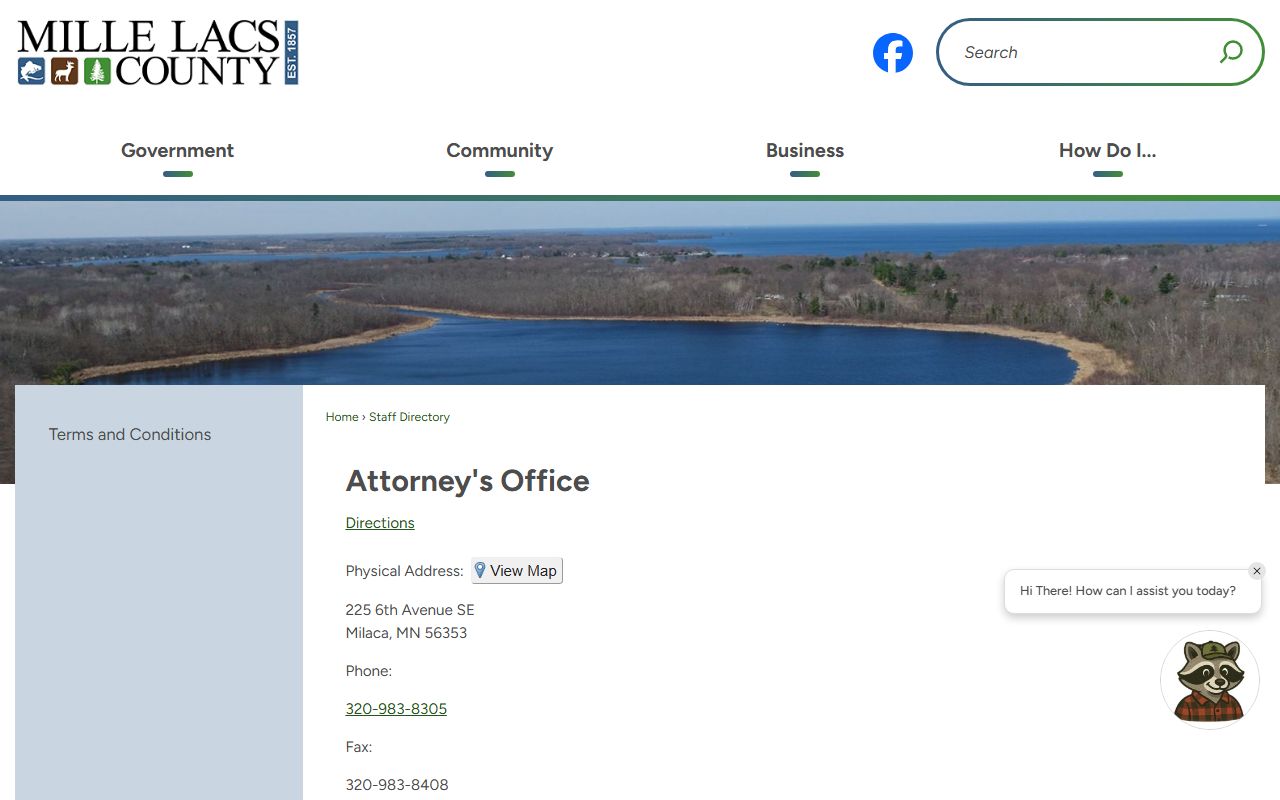
Use the prosecutor directory for office context, then use MCRO or Court Administration for the court file itself.
Mille Lacs County Criminal Case Flow
A criminal court record changes as the case moves. The first public entry may be a complaint, citation, warrant return, bail hearing, or initial appearance. Later entries may show an omnibus hearing, pretrial conference, motion, plea, trial setting, verdict, dismissal, sentencing order, probation condition, restitution, or payment event. Calendar snippets for Mille Lacs County cases have shown hearing types such as Initial Appearance, Rule 8, Omnibus Hearing, Bail Hearing, Review Hearing, Pre-trial, Contested Revocation Hearing, Admit/Deny Hearing, and Scheduling Conference.
Case flow: Charges Filed › Arraignment or First Appearance › Pretrial and Motions › Plea or Trial › Disposition › Sentencing
| Stage | What the Mille Lacs County Record May Show |
|---|---|
| Charges filed | Complaint, citation, offense level, statute, probable-cause text when public, filing date, and prosecutor information. |
| First appearance | Rights, counsel issues, bail or release conditions, next hearing, and court branch information. |
| Pretrial or omnibus | Motions, contested issues, hearing settings, continuances, discovery-related entries, or plea negotiations reflected by docket events. |
| Plea or trial | Plea entered, trial minutes, verdict, acquittal, dismissal, amended charge, or other charge-level outcome. |
| Sentencing | Sentence, probation, fines, fees, surcharge, restitution, jail credit, and later review or revocation entries when public. |
Public calendar data is useful, but it is not the full case file. The research notes that posted calendars do not include all matters handled each day, confidential cases may be absent, and printed calendars at the courthouse can be the most current daily source.
Mille Lacs County Criminal Record Fields
Criminal court records in Mille Lacs County use Minnesota case-number patterns. Public examples include numbers such as 48-CR-26-873, where 48 is the county identifier and CR marks a criminal case type. A record can also show the court location, Seventh Judicial District reference, party names, attorney information, hearing history, docket entries, documents, financial data, disposition, and sentence terms. Some data is redacted or withheld from remote access, including party street addresses and many comment fields. Criminal sentencing condition comments may display in MCRO, but other comments do not always appear remotely.
| Field | What It Shows |
|---|---|
| Case Number | Minnesota case identifier, often with county prefix 48 and CR for criminal cases. |
| Case Status | Search filters may show active or inactive status, while case details can show more specific disposition language. |
| Defendant and Attorneys | Public party and counsel names, subject to remote-access and privacy limits. |
| Charges | Offense description, level, statute, filing date, and later amendments or dismissals when posted. |
| Hearings | Date, time, courtroom, hearing type, connection type, judicial officer, and case number where public. |
| Register of Actions | Chronological list of filings, notices, orders, hearings, dispositions, and financial or sentence events. |
| Disposition | Outcome of a charge or case, such as guilty plea, verdict, acquittal, dismissal, or other court action. |
| Sentence | Jail, probation, conditions, fines, fees, restitution, surcharge, or other penalties when public. |
The County Attorney press releases page shows how local criminal-case updates may discuss charges, investigations, judges, sentencing, and prosecutor contact details. Press releases are not the official case file, but they can help readers understand the public terms used in criminal court records.
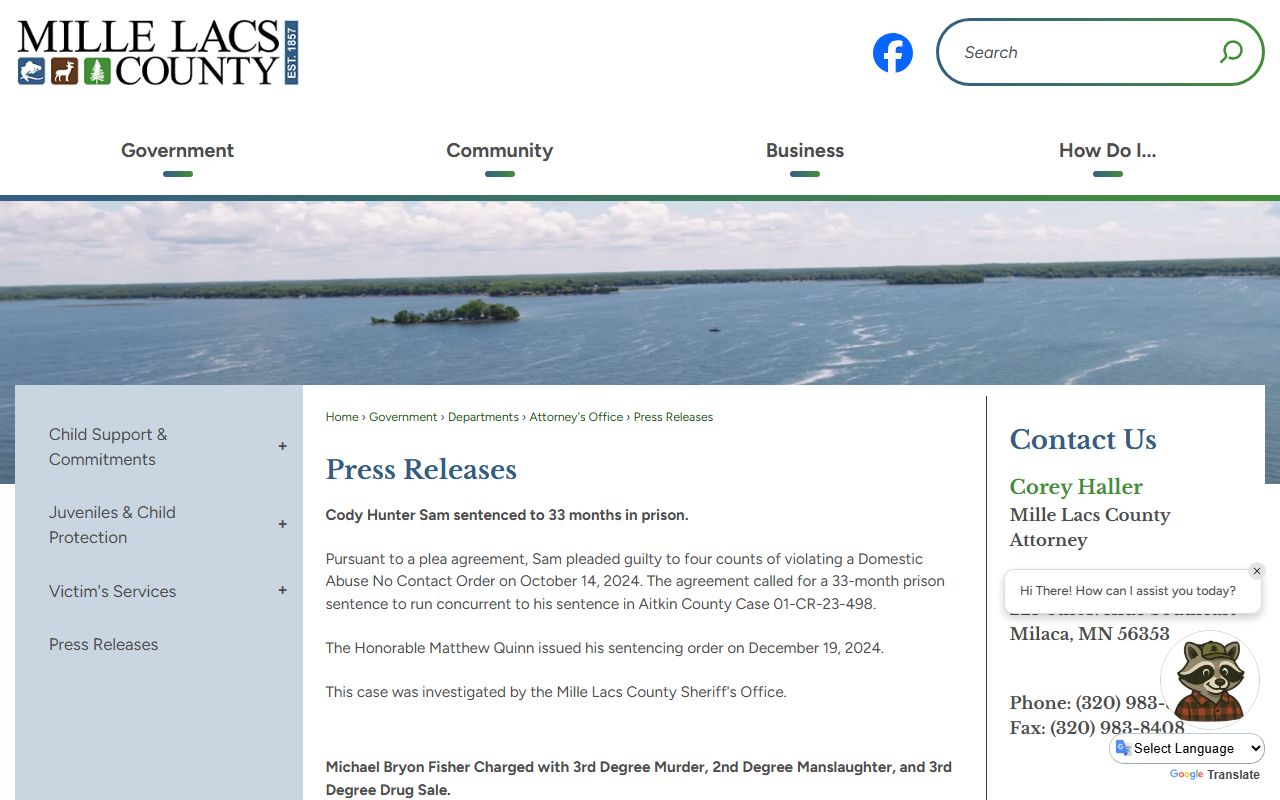
When press-release text and MCRO case entries differ, the court record and certified copies from Court Administration control.
Mille Lacs Criminal Charges vs Convictions
A charge is an accusation. A conviction is an adjudication of guilt after a guilty plea, verdict, or finding. The distinction matters in Mille Lacs County criminal court records because the file may list charges that were later amended, reduced, dismissed, or resolved without a conviction. The county jail locator disclaimer also states that booking does not establish guilt or conviction. Read each charge line with the disposition and sentence entries before treating the record as an outcome.
| Point | Charge | Conviction |
|---|---|---|
| Meaning | Filed accusation or count in a complaint, citation, or other charging record. | Final guilt result after plea, verdict, or court finding. |
| Where It Appears | Charge section, complaint, Register of Actions, and early hearing entries. | Disposition, sentence, judgment, and criminal-history systems if reportable. |
| Can Change | May be amended, reduced, dismissed, or supplemented. | May be corrected, appealed, vacated, or later affected by expungement, but it is the case outcome while it stands. |
| How to Read | Check statute, offense level, count number, filing date, and current status. | Check plea or verdict, disposition date, sentence, probation terms, and restitution. |
Public Access to Mille Lacs Criminal Records
Minnesota court access starts with public access rules, not a county-only policy. Minnesota Statutes section 13.03 provides that government data are public unless classified otherwise. Section 13.01 sets the broader Government Data Practices Act framework for Minnesota government entities. Judicial case records also follow the Minnesota Rules of Public Access to Records of the Judicial Branch. Rule 4 addresses access to case records, while Rule 8 governs inspection, copying, bulk distribution, and remote access limits referenced by MCRO.
Access note: MCRO is an official search system, but its online data is not a certified copy and may show less than courthouse public access.
The Minnesota expungement chapter scope page identifies Chapter 609A as the statutory chapter for expungement of criminal records. That chapter matters because public access can change after a sealing or expungement order, even when an older docket entry once appeared online.
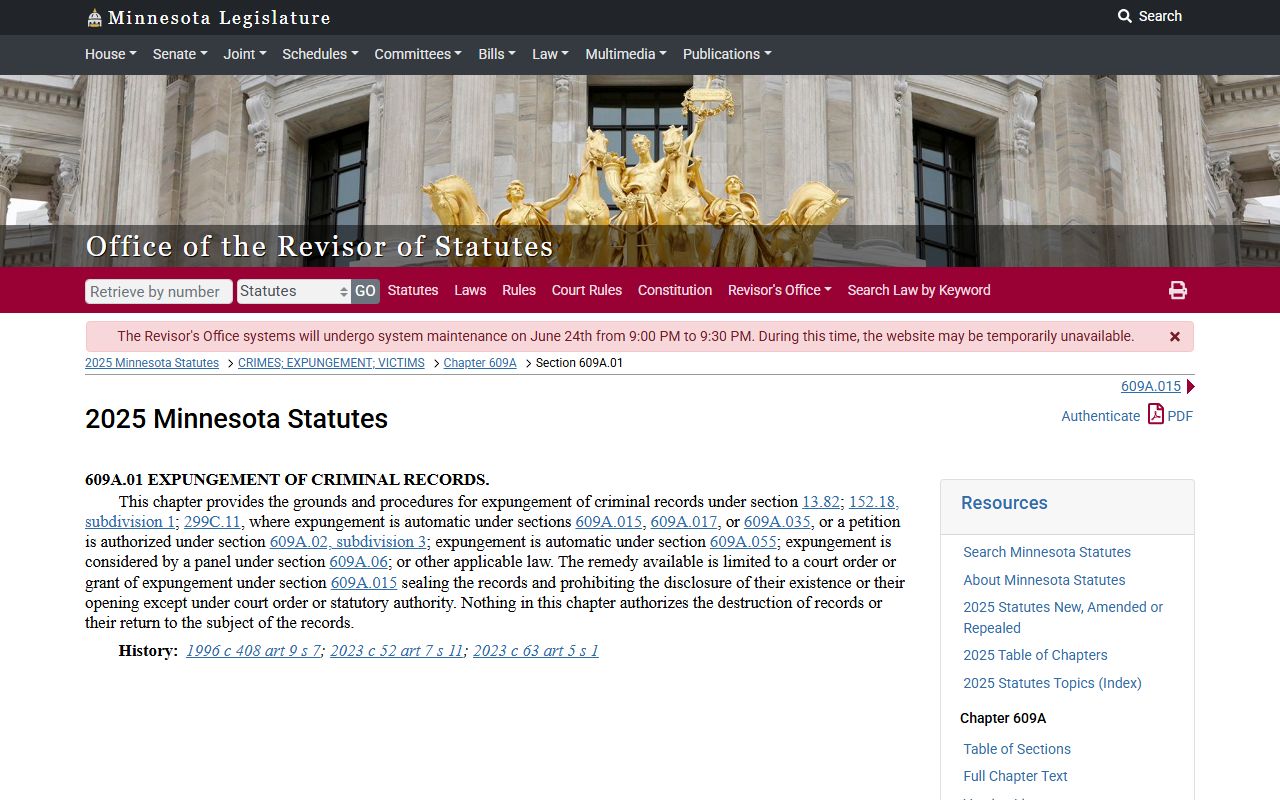
Public access and expungement rules should be read together when an old criminal case is missing from a normal search.
Mille Lacs Criminal Sealed vs Expunged
Sealing and expungement are often used together in plain speech, but Minnesota criminal record access depends on the statute, court order, agency, and case outcome. A sealed record is not open to normal public inspection unless law or a court order permits access. Expungement under Chapter 609A can seal or limit access to criminal records held by courts and other agencies as the order provides. It does not mean every trace is deleted from all government systems.
| Point | Sealed Record | Expunged Record |
|---|---|---|
| Public View | Hidden from ordinary public searches unless access is allowed by law or order. | Restricted under automatic or petition-based expungement rules when eligibility is met and relief applies. |
| Agency Reach | May affect court access, agency access, or both depending on the order. | Can involve court, BCA, prosecutor, and law-enforcement records, depending on statute and order terms. |
| Eligibility | Depends on case type, confidentiality rule, and order. | Depends on Chapter 609A, including exclusions such as certain registration offenses. |
| Best Source | Court Administration or the order sealing the file. | The District Court order, automatic eligibility rule, or petition record. |
The automatic expungement eligibility statute covers specified qualifying records, including some dismissal or exoneration outcomes. Automatic relief is still tied to statutory terms, so a person should not assume a record is sealed just because a charge was dismissed.
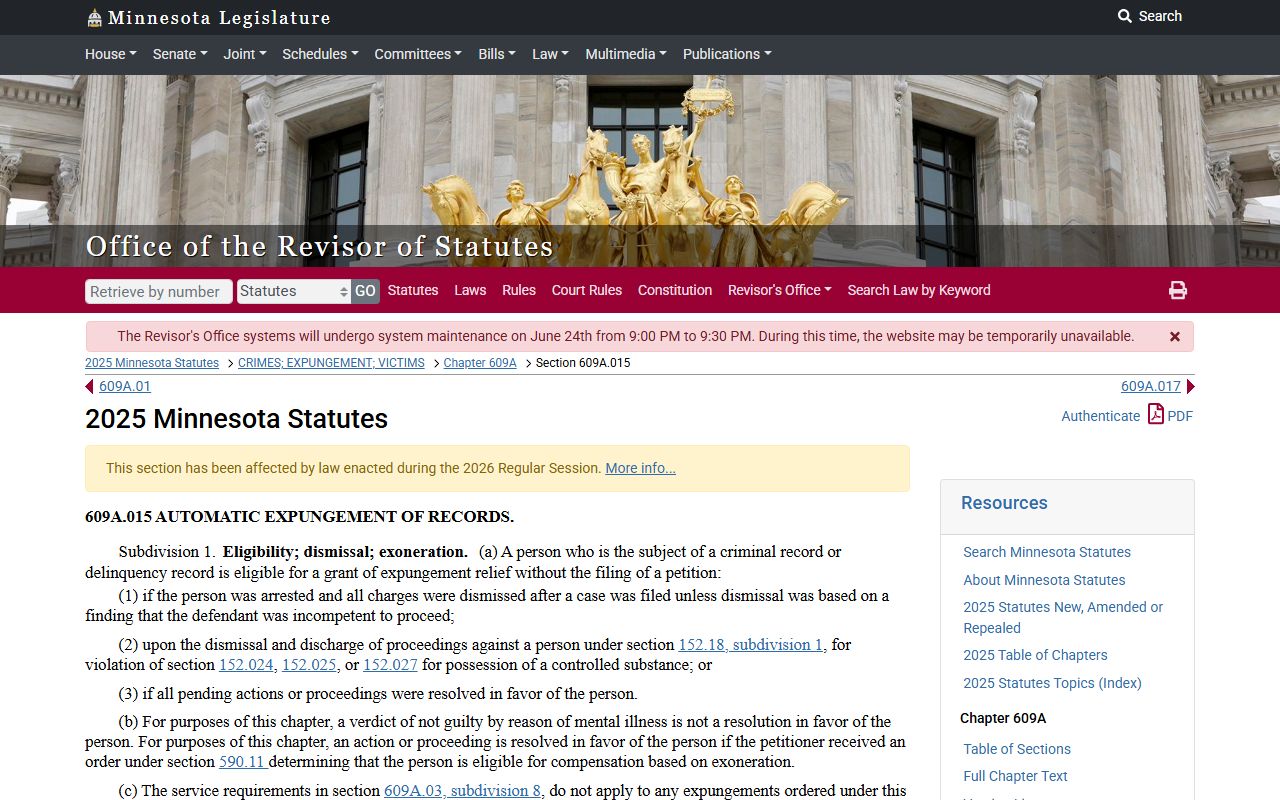
Automatic expungement can explain why a once-public case may no longer appear through ordinary remote access.
Read Mille Lacs Criminal Dispositions
A disposition is the outcome of a charge or case. In a Mille Lacs County criminal court record, one case can have several counts with different outcomes. One count may show a guilty plea, another may be dismissed, and another may be amended to a lower offense level. Sentencing can then add probation, jail, restitution, fees, fines, surcharge amounts, conditions, or review hearings. Read the disposition date, count number, offense level, plea or verdict, and sentence entries as a group.
Useful terms include complaint, criminal complaint, citation, Register of Actions, motion, order, judgment, dismissal, plea, arraignment, omnibus hearing, bail, bond, probation, sentence, restitution, continuance, warrant, bench warrant, expungement, sealed record, and certified copy. These terms are part of the Minnesota court record vocabulary and appear across criminal, traffic, and related case types.
The petition-based expungement route is described in Minnesota Statutes section 609A.03. The research notes that a petition asks the District Court to identify the case, offense, disposition, agencies holding records, and legal basis for relief, with filing-fee and waiver rules tied to the statute.
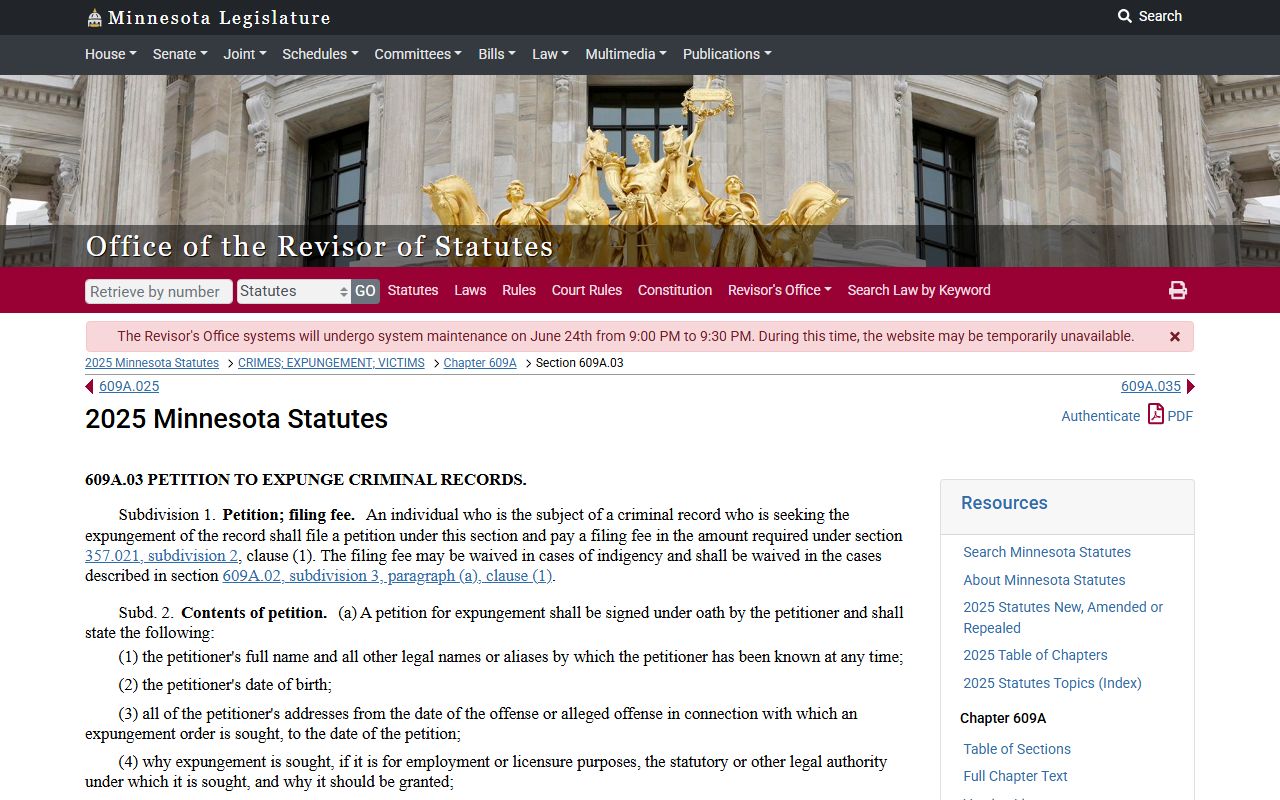
Disposition details are central to expungement review because eligibility often turns on the outcome and offense type.
Mille Lacs Criminal Background Checks
MCRO should not be treated as a full background-check system. The statewide criminal-history route is the Minnesota Bureau of Criminal Apprehension public criminal history search, which is governed by Minnesota criminal-history law and is separate from the court case file. Court records show case events and documents. BCA criminal history is a background-check source. The Minnesota Department of Corrections public viewer is a different tool for adults committed to the Commissioner of Corrections or still under DOC jurisdiction.
Important: Criminal court records can be incomplete for screening uses unless verified through the proper official background-check channel.
Restricted Mille Lacs Criminal Records
Not every criminal or related case record is public online. Juvenile delinquency cases are generally confidential, with limited public access for some felony-level cases where the juvenile was at least sixteen at the time of the alleged offense. Domestic Abuse Order for Protection and Harassment Restraining Order case types are not displayed remotely in MCRO because of federal VAWA internet-display restrictions. Civil commitment records are also limited in remote document access.
Sealed and expunged records are not visible in ordinary public searches unless law or a court order permits access. Pending criminal, traffic, or petty misdemeanor records without conviction may not return by defendant-name search in MCRO, but may return by case number. Party street addresses, many comment fields, Social Security numbers, financial account numbers, minor-identifying details, and other private data may be redacted. Certified copy and courthouse access questions should go to the Court Administrator at the District Court, not to a third-party search result.